
How to Choose a Safe Transportation Company
Choosing a safe transportation company takes more than comparing rates, delivery times, and available equipment.
Most providers promise safe, reliable service, but shippers still need to understand who will actually move their freight, how that company operates, and what its safety record shows.
Carrier selection, fraud prevention, insurance verification, and transportation risk are getting more attention across the industry. That does not mean shippers need to treat every shipment like a legal investigation, but it does make basic verification and clear documentation more important.
There is no single score or database that tells the whole story. The best approach is to verify the provider, review available safety information, and ask the right questions.
What you check will depend on whether you work directly with a motor carrier, use a freight broker, or have an unfamiliar truck arrive at your dock.
Start With Who Will Actually Move Your Freight
Before reviewing safety records, determine which company will physically transport the shipment.
You may be working with:
-
A motor carrier using its own trucks and driving team
-
A freight broker hiring another carrier
-
An asset-based company that also brokers some shipments
Each model can provide valuable service, but the level of direct oversight differs.
An asset-based carrier manages its own drivers, equipment, maintenance, dispatch, and safety practices. A broker arranges transportation with a separate motor carrier.
Before booking, consider asking:
-
Will your company physically transport this shipment?
-
What is the USDOT number of the carrier operating the truck?
-
Could another carrier receive the load?
-
Will we be notified if the assigned carrier changes?
-
Can the shipment be rebrokered?
A USDOT number is generally a better way to verify a carrier than its name alone. Transportation businesses may operate under legal names, trade names, or affiliated companies.
When Working With a Freight Broker
When you use a freight broker, you are relying on that company to select a qualified motor carrier to move your shipment. Many brokers provide valuable service, especially when they have a clear process for verifying, selecting, and monitoring carriers.
Most shippers cannot independently review every carrier used for every load, so the focus should be on understanding how the broker manages that responsibility.
Start by confirming the broker’s legal name, operating authority, and insurance information. You can use the FMCSA Motus public search to help verify registration information. Depending on the shipment, shippers may also want to confirm appropriate cargo coverage and understand how claims are handled.
Then ask about the broker’s carrier-vetting process:
-
How do you verify carrier identity, authority, and insurance?
-
What safety information do you review before approving a carrier?
-
How do you monitor carriers after they are approved?
-
What would cause you to stop using a carrier?
-
How do you address unauthorized rebrokering or carrier identity fraud?
-
Will we be notified if the carrier assigned to our shipment changes?
The goal is not to duplicate the broker’s work. It is to make sure the broker has a clear, consistent process for selecting and monitoring the companies that may handle your freight.
Keep relevant contracts, insurance information, cargo coverage details, and carrier-vetting documentation with your transportation records so your team can easily reference them when needed.
When Hiring a Motor Carrier Directly
Hiring a carrier directly gives you more visibility into the company physically handling your freight. It does not guarantee safe performance, but it can make the carrier’s equipment, service, communication, and internal practices easier to evaluate.
Review Federal Records
Search the carrier’s USDOT number using the FMCSA SAFER Company Snapshot.
The Company Snapshot provides public information about a carrier, including company identification, operating status, fleet information, roadside inspection results, out-of-service information, crash involvement, and a federal safety rating when one is available.
Review:
-
Legal and DBA names
-
USDOT and operating status
-
Fleet and driver information
-
Driver and vehicle inspection results
-
Out-of-service rates
-
Reportable crash involvement
-
Federal safety rating, when available
Compare the federal information with the carrier’s quote, contract, insurance documentation, website, and other paperwork. Ask questions when important details do not match.
Put the Numbers in Context
A percentage alone does not tell the full story.
For example, one out-of-service inspection out of two creates a different picture from recurring concerns across hundreds of inspections. Look at both the rate and the number of inspections behind it.
Crash involvement also requires context. A reportable crash does not necessarily mean the carrier caused the accident. Consider crash information alongside fleet size, mileage, operating area, and overall inspection history.
Higher-than-average results may deserve additional questions. Lower rates can be encouraging, but no historical number guarantees future performance.
Federal records also change over time, so review current information rather than relying solely on an old report or marketing statistic.
Ask About Internal Safety Practices
Public records cannot show everything happening inside a transportation company.
Consider asking:
-
Will your company operate the trucks handling our freight?
-
How do you qualify, train, and support drivers?
-
How do drivers report equipment concerns?
-
How often do you inspect and maintain equipment?
-
Do you perform maintenance internally or through outside vendors?
-
What safety technology do you use?
-
How do you respond to safety events?
-
Will you broker any portion of our freight?
Specific answers usually provide more insight than a broad statement that safety is important.
Ask for Customer References
Customer references can help fill the gap between public records and everyday performance.
When deciding how to choose a safe transportation company, ask for references from businesses with similar freight, service needs, or operating requirements.
Useful questions include:
-
How long have you worked with this provider?
-
Does the company meet pickup and delivery expectations?
-
How well does the team communicate?
-
What happens when a delay or service issue occurs?
-
How does the provider respond to claims or mistakes?
-
Would you trust the company with a critical shipment?
No transportation provider performs perfectly every time. Pay attention to how the company communicates, takes responsibility, and works through problems when something goes wrong.
A conversation with an established customer can often tell you more than a general testimonial on a website.
What Shipping and Receiving Teams Should Watch For
Carrier review should not end when a truck reaches your facility.
Shipping and receiving teams do not need to conduct roadside inspections or enforce federal driver qualifications. They should, however, have a clear process for escalating concerns when something does not match or a condition could affect safe loading or unloading.
Confirm the Arriving Carrier
Compare the truck, carrier, driver, and paperwork with the shipment information your company received.
Pause and contact the transportation provider when:
-
An unexpected carrier arrives
-
The company name or USDOT number does not match
-
The driver cannot provide the expected shipment information
-
The load appears to have been transferred to another carrier without notice
There may be a reasonable explanation, but verify unexpected changes before releasing freight.
Address Obvious Safety Concerns
Avoid judging a carrier by the age of its equipment, uniforms, or appearance. A polished truck does not prove that a company operates safely.
Instead, pay attention to conditions that could directly affect your employees or the loading process, such as significant trailer damage, an unstable floor, severe tire damage, damaged doors or latches, or unsecured components.
If something appears unsafe, pause the process and involve a supervisor, carrier, or broker.
Communication matters too. Drivers need to understand site directions, loading instructions, safety requirements, and paperwork necessary to complete the work safely. If communication prevents that, contact the carrier or broker for assistance.
Provide Accurate Shipment Information
Shippers have a role in safe transportation as well.
Provide accurate:
-
Freight weights
-
Commodity descriptions
-
Pallet and piece counts
-
Hazardous-material information when applicable
-
Shipment-specific handling or loading instructions, when applicable
-
Bills of lading and other required documents
Accurate information helps everyone involved handle the shipment appropriately.
Warning Signs Worth a Closer Look
Take additional time to investigate when:
-
Federal records do not match the company’s paperwork
-
The carrier appears inactive, unauthorized, or out of service
-
Insurance or operating authority cannot be confirmed
-
Cargo coverage is unclear for the type of shipment being moved
-
The provider will not identify the carrier moving the load
-
An unexpected carrier arrives without explanation
-
The broker cannot explain its carrier-vetting process
-
The shipment may be rebrokered without your knowledge
-
Inspection records show recurring equipment or driver concerns
-
Customer references reveal repeated communication or service problems
-
A visible condition could make loading unsafe
One inconsistency may have a reasonable explanation. Several should not be ignored simply because the rate is attractive or a truck is available.
Why Transportation Provider Selection Matters
Court decisions have brought additional attention to how transportation providers select motor carriers.
In the 2026 Montgomery v. Caribe Transport II decision, the U.S. Supreme Court held that a negligent-hiring claim involving a broker’s selection of a motor carrier was not preempted by federal law because the FAAAA’s safety exception applied. The Court did not decide whether the broker acted negligently.
The case reinforces a practical point: businesses should use available information, ask reasonable questions, and take transportation provider selection seriously.
Transportation laws and court decisions can change. Businesses should consult qualified legal and insurance professionals regarding their own contracts, policies, and risk-management practices.
Inontime’s Approach to Transportation Safety
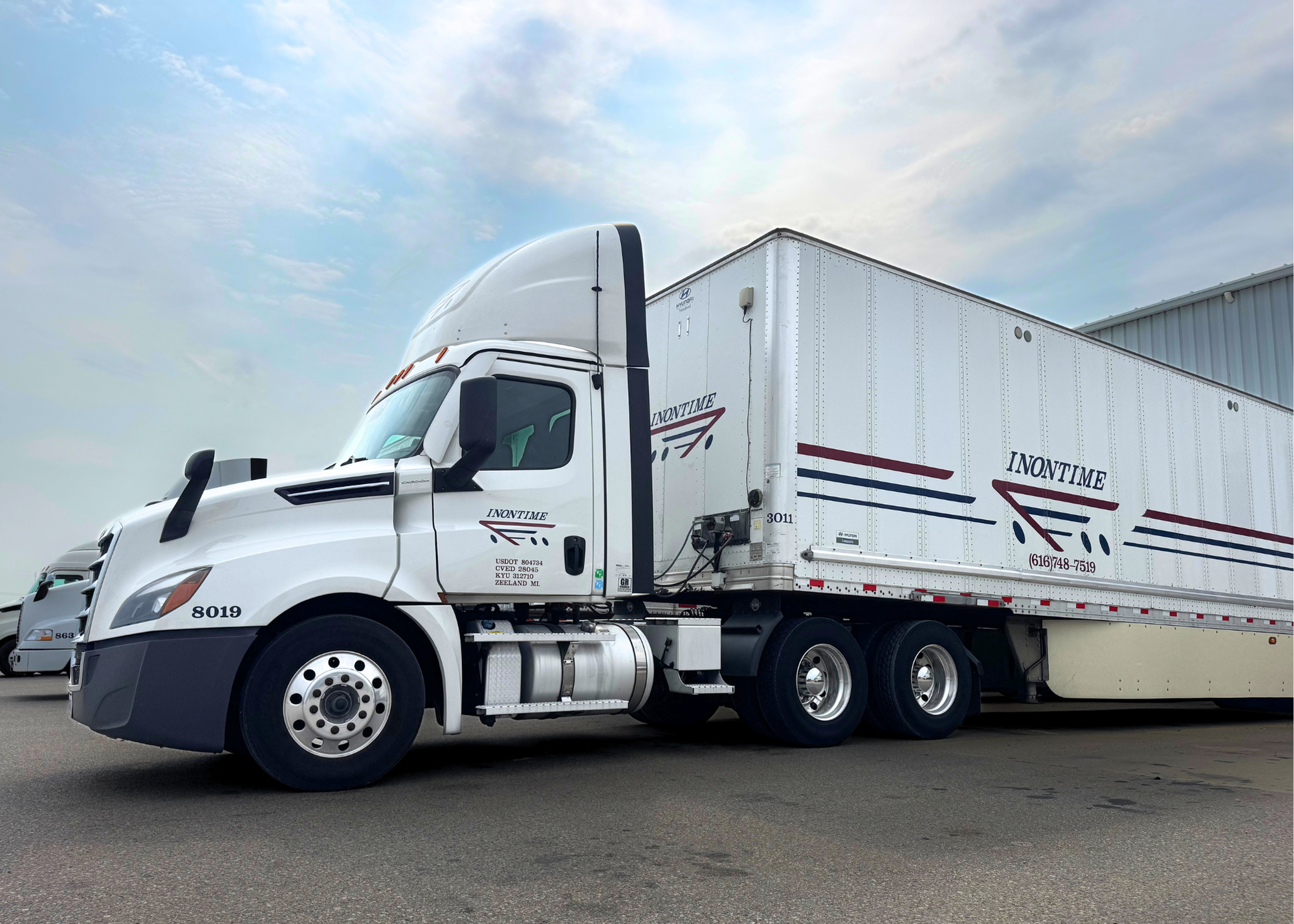
At Inontime, we encourage customers to evaluate us using the same steps we recommend when researching any transportation provider.
Customers can search USDOT 804734 through the FMCSA SAFER Company Snapshot or Motus to review current publicly available information.
As an asset-based transportation company, Inontime directly oversees its driving team, fleet, dispatch, maintenance practices, and safety programs.
Our Transportation Safety Snapshot provides additional information about our driver standards, fleet maintenance, safety technology, insurance, and performance.
Want a closer look at our safety practices and performance? View our latest Transportation Safety Snapshot.
Learn more about Inontime transportation services or contact our team with questions about how we manage freight.
Quick Transportation Provider Checklist
-
Identify the company that will physically move the freight
-
Verify its legal name and USDOT number
-
Confirm operating authority and insurance information
-
Confirm appropriate cargo coverage when needed
-
Review relevant federal safety records
-
Ask how outside carriers are selected and monitored
-
Understand whether the shipment may be rebrokered
-
Request appropriate customer references
-
Confirm how carrier changes will be communicated
-
Give shipping teams a process for escalating concerns
-
Keep relevant transportation records organized and accessible
The Bottom Line
Understanding how to choose a safe transportation company does not come down to one score, inspection, or marketing claim.
When using a broker, focus on its reputation, carrier-vetting process, insurance verification, and communication standards. When hiring a carrier directly, review its federal information, insurance, operating practices, and customer references.
At the dock, confirm that the company arriving matches the information provided and address obvious concerns before loading.
Choosing a transportation provider can still feel complicated. A practical review can help your company make a more informed decision without creating an impossible checklist for every shipment.
This article provides general information and does not constitute legal, regulatory, or insurance advice. Consult qualified professionals regarding your company’s specific responsibilities and risk-management practices.
Last reviewed: August 2026